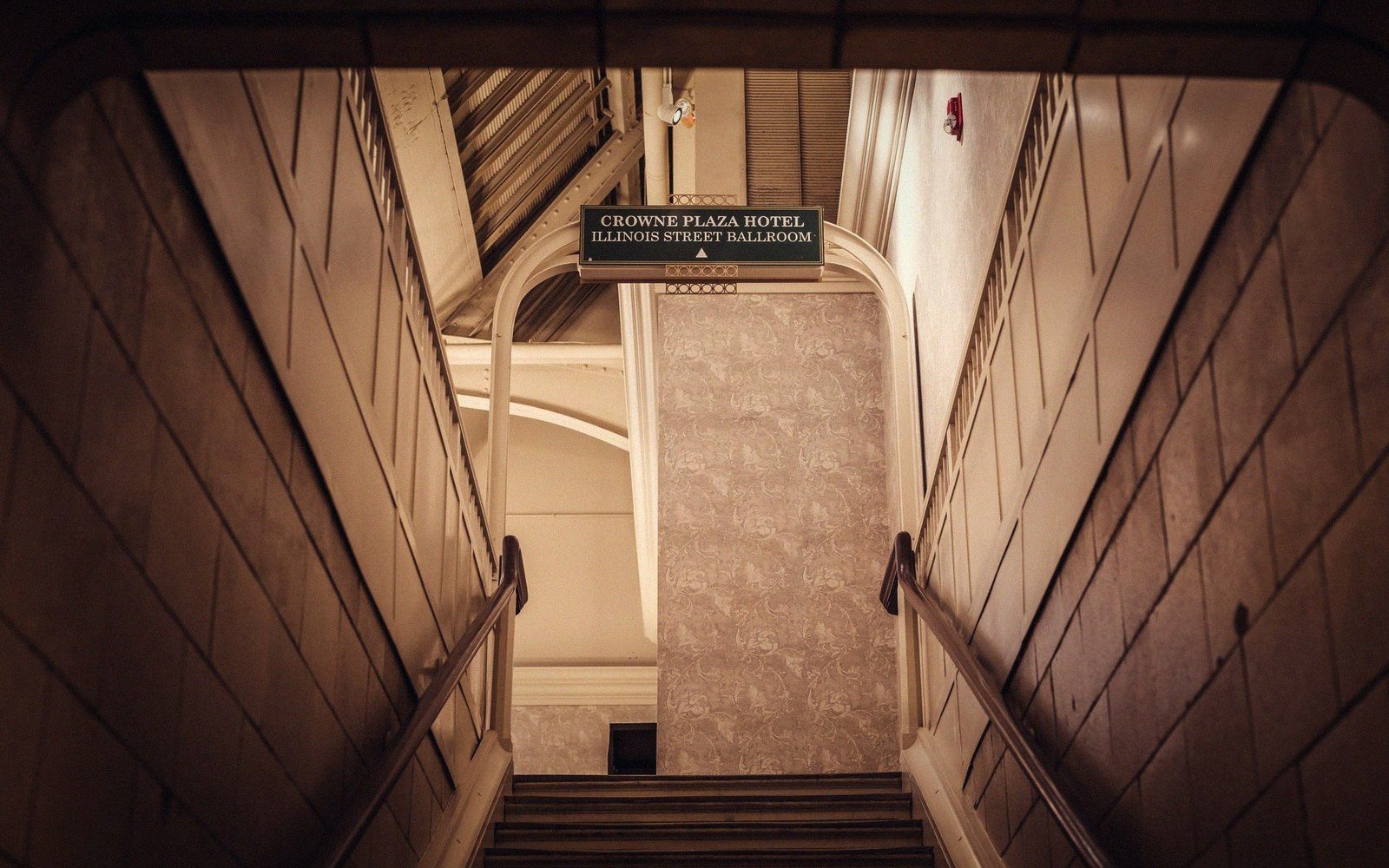
The Distinction That Actually Matters
Historic preservation, in its strictest regulatory form, insists on fabric: the original materials, finishes, spatial relationships, and — in the most demanding cases — the original uses. Adaptive reuse accepts that a building survives by changing what it does, and that keeping it alive may require altering what it looks like. These are not points on a spectrum. They are different arguments, and treating them as interchangeable is the first mistake most hotel conversion projects make.
The conflict crystallises around two spaces. A hotel lobby was never static — it was operated, lit, furnished, and re-furnished on a cycle tied to revenue and fashion. A ballroom was built for assembly, which requires acoustic clarity, flexible load capacity, and a service infrastructure that can be reconfigured. Neither was designed as a historic artifact. Both are now frequently treated as one.
When a landmark designation freezes a lobby at a particular year — fixing the terrazzo pattern, the column cladding, the coffered ceiling — it can make the space functionally unusable for the programme a reuse project needs to sustain it financially. The irony is structural: the regulation meant to save the room may be the reason no developer can afford to. The conversion arithmetic is well-documented elsewhere; what matters here is that the argument precedes the numbers.
Note 01
The core tension
The ballroom case is starker. A long-span ballroom in a pre-war city hotel was engineered for a specific live load and a specific acoustic environment. Subdividing it for office or residential use — the most common reuse proposal — requires interventions that preservation covenants routinely prohibit: new penetrations, dropped ceilings, mechanical chases. The ballroom that cannot be subdivided cannot easily become anything else, but neither can it sustain itself as a ballroom without a hotel operating around it.
Neither position is wrong in principle. Preservation advocacy rightly insists that fabric carries meaning that drawings cannot recover. Reuse advocacy rightly insists that a building nobody uses will eventually not be a building. The problem is that both sides tend to argue as if they are making the same kind of claim — about the building's future — when one is making a claim about the past.
The productive conversation is not preservation versus reuse. It is a negotiation about which elements carry irreplaceable meaning and which carry only nostalgia, and who, precisely, gets to make that call.
Note 02