What the Blank Band Contains
Gravity does not help water travel upward, and electricity loses voltage over long vertical runs. These two facts, together, are the reason a tall hotel cannot be serviced from a single basement plant room. Above roughly twelve to fifteen floors, the mechanical systems — chilled-water loops, domestic hot and cold supply, steam or condensate return, electrical distribution panels, elevator machine gear, and exhaust plenum — must be interrupted and boosted at an intermediate level. That level is the mechanical floor, sometimes called a mechanical interstitial floor or, in the trade shorthand of MEP engineers, a machine floor.
A typical city hotel of thirty or more storeys will carry one or two of these floors, positioned not arbitrarily but according to the pressure zones the plumbing engineer has drawn. Domestic cold water supplied from the municipal main at street level can push to a certain height before static pressure falls below code minimum at the highest fixture. The solution is a mid-rise pressure-booster pump set, housed on the mechanical floor, fed by a break tank that gravity-fills from the roof storage above. The floor thus sits at the hinge point of two pressure zones — below it, one regime; above it, another.
The chilled-water and heating circuits follow similar logic. A central chiller plant in the basement can only push refrigerant-side water so far before friction losses in the risers make the system unworkable. Fan-coil units on the upper floors would starve. Secondary pumps on the mechanical floor re-energise the loop. Electrical engineers draw the same kind of zone boundary: a mid-rise switchboard and transformer vault receive primary voltage from the utility risers and step it down for the guestroom floors above and below.
Note 01
Spatial logic at a glance
Why It Shows on the Face of the Building
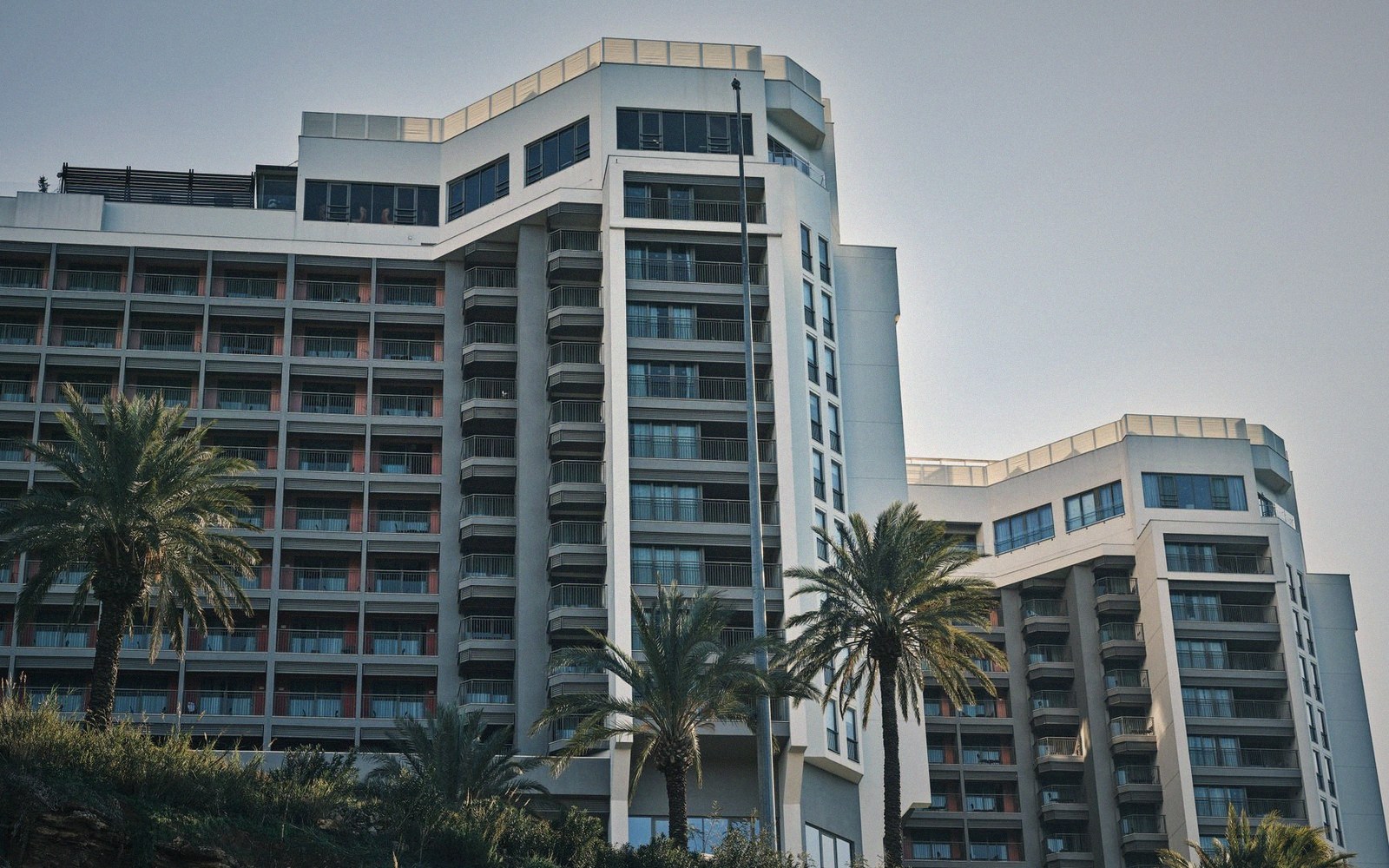
The equipment inside a mechanical floor is tall. Pump sets, air-handling units, expansion tanks, electrical switchgear — none of this fits in a standard eight-and-a-half- or nine-foot finished ceiling. The structural engineer must provide a full floor-to-floor height of twelve to fourteen feet, sometimes more if large-diameter ductwork must cross the space horizontally to reach multiple riser shafts. That extra height is plainly visible from outside: the window band narrows, or disappears entirely, replaced by louvred openings for fresh-air intake and exhaust. The louvres are the tell. Where a guestroom floor has a regular rhythm of windows, the mechanical floor substitutes a coarser, darker pattern of ventilation grilles.
Hotel architects have handled this in various ways. Some embrace it as a horizontal datum — a cornice line in disguise. Others clad it in a different material, effectively bracketing the tower into visual sections. A few have tried to hide it by running the same curtain-wall grid across the louvres, a decision that maintenance engineers tend to regard sourly when the time comes to replace a pump. The louvres need to be accessible from outside as well as within, and a curtain wall that pretends they are not there makes both tasks harder.
The Floor That Is Never Finished
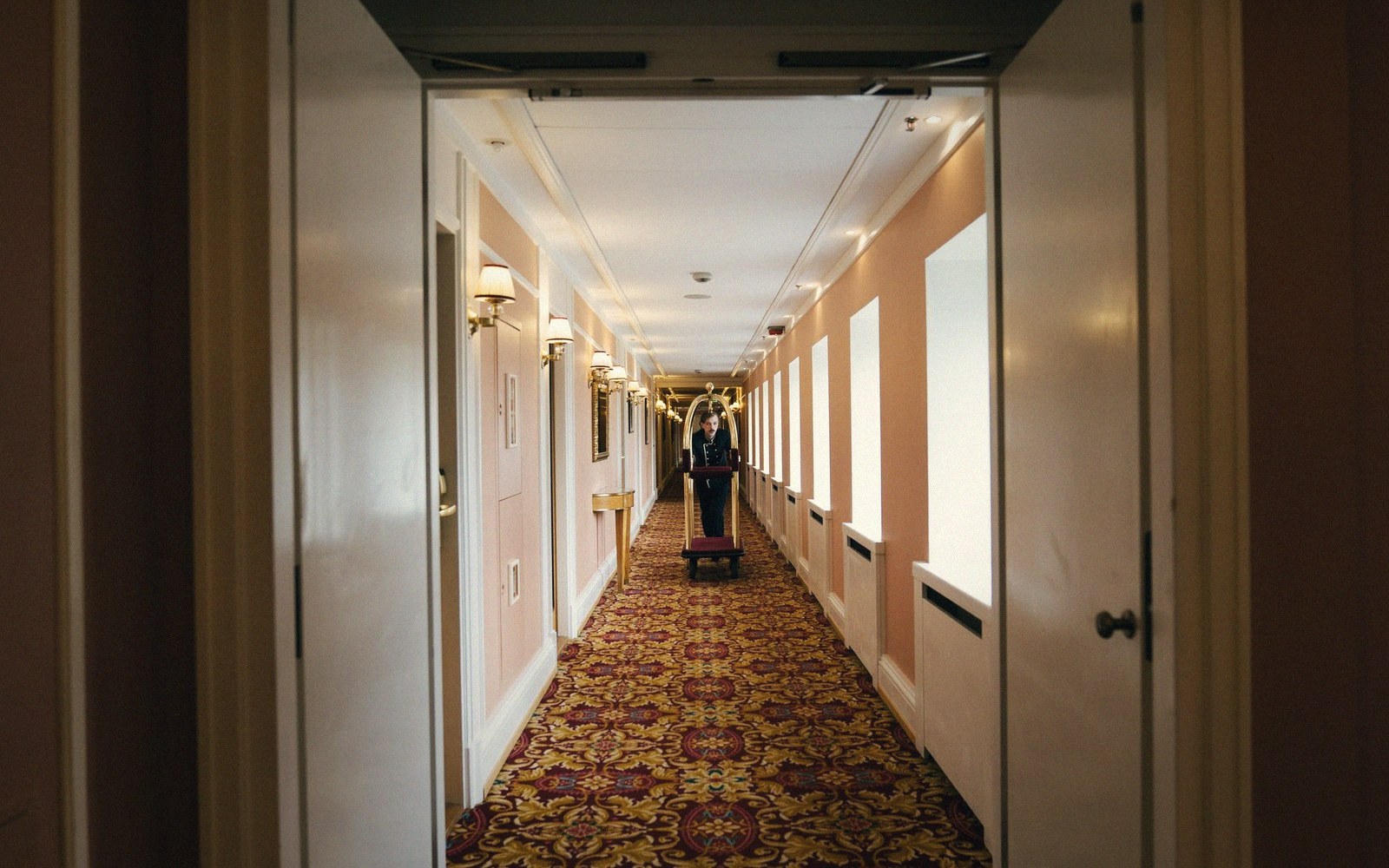
From a guest's perspective, the mechanical floor does not exist. It appears on no room-numbering sequence — buildings routinely skip from floor 12 to floor 14, or label the mechanical level M — and the elevator buttons bypass it entirely. From a facilities-management perspective, it is the most consequential floor in the building. Rerouting a chilled-water riser means opening up this floor first. Replacing an air-handling unit means scheduling a crane, or finding out whether the original construction left an equipment hatch in the facade.
That hatch — or its absence — is often the first thing a mechanical engineer asks about when inheriting an older building. The machine room was built for the equipment of its era. The equipment will be replaced; the structure that holds it will remain. Whether the two can still work together is, in a tall hotel, never a small question.
Note 02